Investment Education

Empower yourself with knowledge. Our Investment Education blog category provides clear, practical insights for investors of all experience levels. From understanding financial fundamentals to exploring advanced strategies in private equity, real estate, and retirement planning, this section is your go-to resource for building long-term wealth. Whether you’re managing a Self-Directed IRA or evaluating market trends, we break down complex topics into actionable guidance to help you invest with confidence.

Why a Self-Directed IRA Is the Best Retirement Vehicle for Savvy Investors
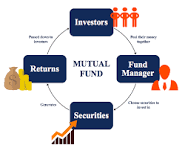
Mutual Funds are both private and public depending on registration

When it comes to planning for retirement, most Americans are familiar with traditional IRAs and 401(k)s, which typically offer a narrow range of investment options—mainly stocks, bonds, and mutual funds. But for those looking to take control of their financial future, expand their investment horizon, and unlock real diversification, a Self-Directed IRA (SDIRA) stands out as one of the most powerful retirement vehicles available.
Here’s why a Self-Directed IRA may be the best option for growing and protecting your retirement wealth:

Why a Self-Directed IRA Is the Best Retirement Vehicle for Savvy Investors Read More »

Why a Diversified Private Equity Portfolio Is in the Best Interest of the Investor

Diversification lowers the risk of your portfolio

Private equity has long been considered one of the most lucrative and dynamic investment strategies available. By allowing investors to tap into privately held companies with high growth potential, private equity offers access to returns often unavailable through public markets. But while the opportunities are substantial, so are the risks. That’s why diversification within a private equity portfolio isn’t just a recommendation—it’s a necessity for any prudent investor.

Why a Diversified Private Equity Portfolio Is in the Best Interest of the Investor Read More »

What Is an Option?

Learn How to Invested Like Warren Buffett

In the world of investing, few tools offer as much flexibility—and complexity—as options. Options can help investors hedge risk, generate income, or speculate on price movements, all with relatively small amounts of capital. But before using them, it’s essential to understand what options are, how they work, and what risks they carry.

What Is an Option? Read More »

What Is an Investment?

Learn How to Invested Like Warren Buffett

In the world of finance and wealth-building, the word investment is used often—but what exactly does it mean?
At its core, an investment is the act of putting money, time, or resources into something with the expectation of generating a future return or benefit. While that sounds simple, investments can take many forms, each with varying levels of risk and reward.

What Is an Investment? Read More »

What Is a Self-Directed IRA?

Learn How to Invested Like Warren Buffett

A Self-Directed IRA (SDIRA) is a type of Individual Retirement Account that offers investors significantly more control over their investment choices than traditional or Roth IRAs. While the core tax benefits remain the same—tax-deferred growth or tax-free withdrawals, depending on the account type—the defining feature of a Self-Directed IRA is expanded investment flexibility.

What Is a Self-Directed IRA? Read More »

Value Investing: A Beginner’s Guide to Building Long-Term Wealth The Only Theory that has Worked Over the Last 70 years

Learn How to Invested Like Warren Buffett

If you’re new to investing and looking for a strategy that focuses on long-term success rather than chasing short-term gains, value investing might be exactly what you need. Made famous by legendary investors like Benjamin Graham and Warren Buffett, value investing is a time-tested approach that emphasizes patience, discipline, and buying stocks at a discount to their intrinsic value.

Value Investing: A Beginner’s Guide to Building Long-Term Wealth The Only Theory that has Worked Over the Last 70 years Read More »

Why Buying from Outside Your Country Is More Inflationary Than Tariffs

Help not hurt the economy

Tariffs are not the enemy of the consumer — dependency is. While tariffs may increase specific prices in the short term, they work to anchor price stability by rebuilding domestic production, reducing external vulnerabilities, and keeping value inside the national economy.
By contrast, unfettered importation drains wealth, hollows out industries, and leaves economies vulnerable to foreign shocks — all of which are far more inflationary in the long run.
In truth, the real cause of modern inflation isn’t tariffs. It’s the loss of economic sovereignty — and the answer lies in rebuilding it. Reinvesting in domestic manufacturing, supporting local producers, and enacting smart, protective trade policies will not only lower inflation over time — it will restore prosperity where it belongs: at home.

Why Buying from Outside Your Country Is More Inflationary Than Tariffs Read More »

Private Equity Fund vs. Mutual Fund: Understanding the Key Differences

Mutual Funds are both private and public depending on registration

When it comes to investing, two prominent vehicles often discussed are Private Equity (PE) funds and Mutual Funds. While both pool money from investors to invest in various assets, they operate in fundamentally different ways, cater to different investors, and offer very different risk-reward profiles.

Private Equity Fund vs. Mutual Fund: Understanding the Key Differences Read More »

💼 How You Can Invest in Private Equity for Just $584/Month Using a Self-Directed IRA Higher Returns Mean Better Retirement

Learn How to Invested Like Warren Buffett

Private equity used to be reserved for the ultra-wealthy. Not anymore.
Thanks to Self-Directed IRAs (SDIRAs) or 401k, everyday investors can now access private equity opportunities with as little as $584 per month—all while enjoying tax-advantaged growth.

💼 How You Can Invest in Private Equity for Just $584/Month Using a Self-Directed IRA Higher Returns Mean Better Retirement Read More »

Scroll to Top